
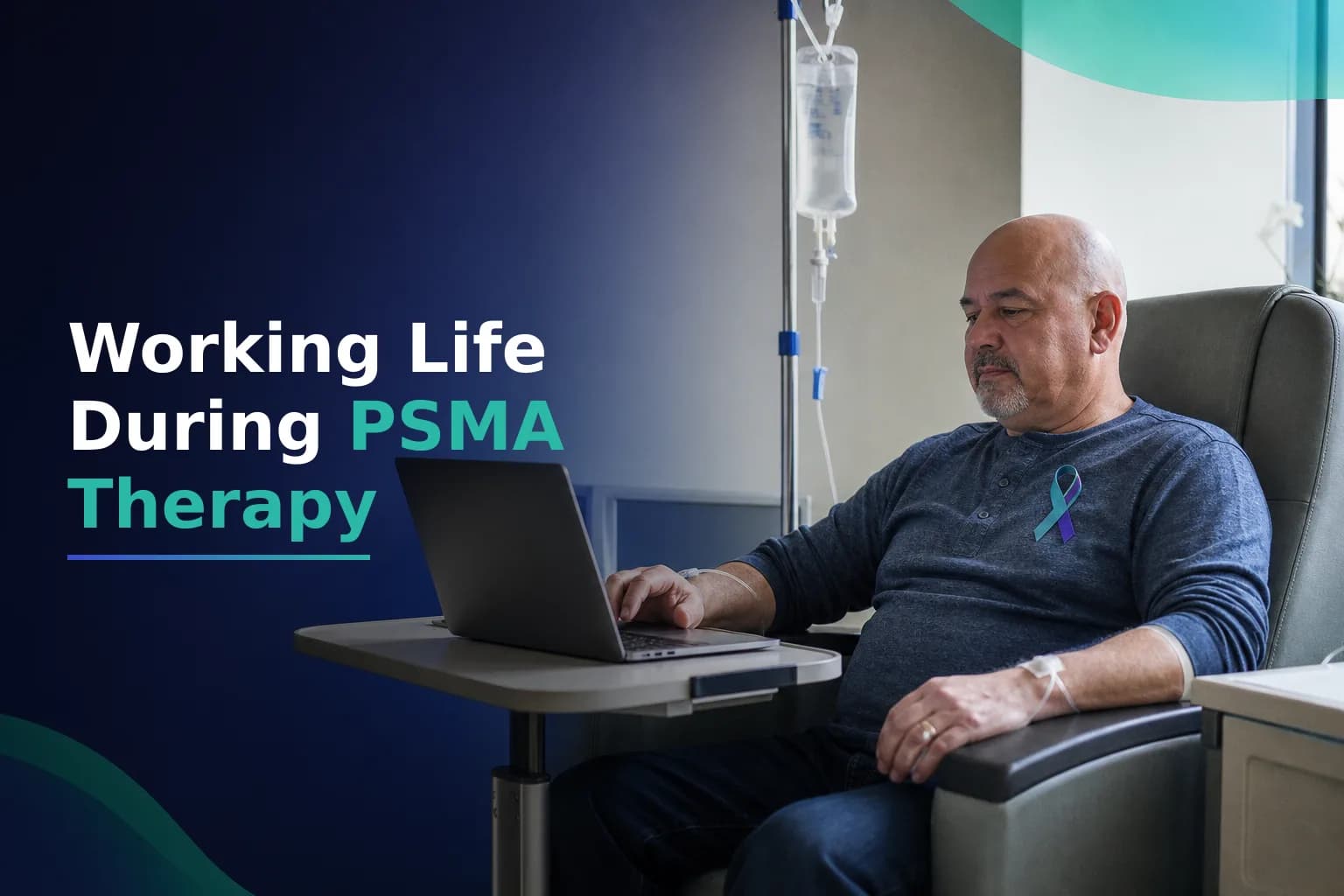
This article is for men with metastatic castration-resistant prostate cancer (mCRPC) who are thinking about or starting lutetium Lu 177 vipivotide tetraxetan (brand name: Pluvicto). If you have neuroendocrine tumours, our Lu-177 DOTATATE content covers that separately.
Short answer: many men with mCRPC keep working during Lu-177 PSMA therapy. Treatment cycles are 6 weeks apart, so most of the cycle involves no infusion at all. Side effects like fatigue are usually mild to moderate. The main practical challenge is the radiation safety period in the first 7 to 10 days after each infusion, which limits close contact with others.
Below is a practical breakdown of what to expect, how the schedule works, and what adjustments tend to help most.
How Is Lu-177 PSMA Therapy Scheduled?
You receive Lu-177 PSMA therapy through an intravenous infusion at a specialist nuclear-medicine centre. The standard course is up to 6 cycles, each 6 weeks apart - roughly one infusion every month and a half, over about 7 to 8 months total.
Each infusion visit takes several hours, including the infusion itself and a short observation period. In most centres, you go home the same day as an outpatient. The Prostate Cancer Foundation describes the outpatient model and the typical cycle structure for this treatment.
Across a full 6-cycle course, you spend approximately 6 days in the infusion suite. The remaining roughly 200 days fall outside the hospital. That spacing is the foundation of any realistic work plan during treatment.
Which Side Effects Are Most Likely to Affect Your Work?
The phase 3 VISION trial led to FDA approval of Pluvicto. Researchers tracked side effects across hundreds of patients. The most common problems were:
- Fatigue - reported in about 43% of patients in the Lu-177 arm
- Dry mouth (xerostomia) - reported in about 39%
- Nausea - reported in more than 20% of patients
- Decreased appetite
- Constipation
- Anemia (low red blood cell count)
Most of these were grade 1 or grade 2 - mild to moderate on the medical severity scale. According to the VISION trial safety analysis, grade 3 or higher fatigue - the level that significantly limits daily activity - affected only about 6% of patients receiving the treatment.
Fatigue timing matters. For most people, fatigue peaks in the first one to two weeks after an infusion and then gradually eases. By week 3 or 4 of the 6-week cycle, energy often returns closer to your baseline. This rhythm is predictable, which makes planning around it easier.
Dry mouth can last longer. The salivary glands absorb some of the radioactive agent, and dryness may linger for weeks after each cycle. Drinking plenty of water, using sugar-free gum, and asking your care team about saliva substitutes may help.
Anemia adds to fatigue. If red blood cell counts drop significantly, both physical stamina and mental sharpness suffer. Your team will check blood counts before every new cycle - this is one reason those pre-cycle blood tests matter.
Some patients with bone metastases notice a temporary flare of bone pain in the first few days after an infusion. This generally passes within a week and should not be confused with disease worsening. For more on this, see our article on bone pain flares during Lu-177 PSMA therapy.
What Are the Radiation Safety Rules After Each Infusion?
After your infusion, a small amount of radioactive material remains in your body and clears mainly through urine over the following days. To protect the people around you, your nuclear-medicine team will give you written radiation safety instructions to follow at home and in the workplace.
Memorial Sloan Kettering's patient guidance for Pluvicto states that precautions are typically needed for 2 to 11 days after each infusion, depending on your specific situation and local regulations. Common instructions include:
- Stay at least 3 feet (about an arm's length) away from others for extended periods
- Sit to urinate for about a week to reduce splashing and contamination
- Wash hands thoroughly after every bathroom visit
- Avoid prolonged close contact with pregnant women and children under 18
- Sleep in a separate room for the first 1 to 2 nights after each infusion
- Inform any medical providers that urine or blood samples may contain trace radioactivity within the first 10 days
Your team will give you written instructions matched to your dose and individual situation. Follow those precisely - the guidance is personalised, not generic.
These rules affect your ability to be in the workplace. If your job involves prolonged close contact with colleagues - or if you work in healthcare near pregnant staff or patients - you may need to work remotely or take short-term leave for the first 5 to 7 days of each cycle. For a full day-by-day breakdown of what radiation safety looks like after treatment, see our guide on radiation safety after Lu-177 PSMA therapy.
Does the Type of Job Make a Difference?
Yes, significantly. Three broad job categories come up most often when patients ask about working through treatment.
Desk-based or remote work is the most manageable. If you work from home or in a role with low physical demand, the main adjustment is reducing hours or workload during the first week of each cycle, when fatigue and radiation precautions overlap. Many patients in this category work part-time or at reduced intensity during that window and return closer to normal capacity by week 2 or 3.
Active roles with regular close contact - teachers, retail workers, healthcare staff, sales roles - require more planning. Radiation precautions restrict sustained close proximity in the first week. Fatigue may also reduce your ability to manage a full active shift. Discussing a temporary change of duties or reduced hours with your employer around each infusion date is worth thinking about in advance.
Heavy manual work - construction, warehouse, or physically demanding industrial roles - is the hardest category to maintain during treatment. Fatigue, possible bone pain from metastases, and anemia can each add to the physical demands of such jobs. Short-term medical leave around each cycle is often the more practical option for patients in this category.
Building a Practical Treatment Calendar
The 6-week spacing between cycles is predictable. That regularity is an advantage when planning work, family commitments, and travel. Here is one way to think about each cycle:
- Days 1 to 7 (infusion day and the first week): Plan for reduced activity. Fatigue, nausea, and radiation precautions all overlap in this window. Work from home if possible. If your role requires close contact with others, consider arranging sick leave for this week ahead of time.
- Days 8 to 21 (the second and third weeks): Energy often returns. For most patients, radiation precautions lift by around day 11. Many people resume work more normally during this period, though perhaps still at a lighter pace.
- Days 22 to 42 (the fourth to sixth weeks): For many patients, this is the most productive stretch of the cycle. Energy is closer to baseline, and the next infusion is still weeks away. This is a good window for demanding commitments, longer work stretches, or travel if you are managing treatment from abroad.
Also factor in pre-cycle blood tests - typically done 1 to 2 weeks before each infusion - as short additional clinic appointments on your calendar.
What to Tell Your Employer
You are not required to disclose your specific diagnosis beyond what is needed to access workplace accommodations. In most settings, a letter from your oncologist or nuclear-medicine team describing the treatment schedule and any work restrictions is sufficient. That letter does not need to include your full diagnosis in detail.
If you plan to continue working, setting realistic expectations early helps. Flexible scheduling, remote work options during recovery weeks, and a temporary reduction in physical duties are reasonable accommodations to discuss. Your care team can write a letter supporting these requests.
For patients traveling from abroad - from the GCC, East Africa, or South Asia - for treatment in India, longer leave planning is often necessary. A full 6-cycle course spans 7 to 8 months. Some patients stay in India for the full duration; others travel back between cycles. Either way, tell your employer before treatment starts to avoid complications later. Before committing to a treatment plan or finalising a leave-of-absence request, confirm your eligibility first. You can request a Lu-177 eligibility review through Art of Healing Cancer to understand whether this therapy is the right next step before you begin reorganising your work and travel arrangements around it.
Managing Fatigue Through the Course
Fatigue during Lu-177 PSMA therapy is common but is usually manageable with some practical adjustments. A few approaches tend to help:
- Rest when you need it, especially in the first week of each cycle - pushing through severe fatigue tends to slow recovery
- Short walks and gentle movement, when tolerated, may help maintain energy over the full treatment course
- Staying well-nourished and well-hydrated helps the body manage the demands of treatment
- Treating anemia when present, under your doctor's guidance, can meaningfully reduce fatigue
- Managing bone or joint discomfort at night can improve sleep quality and daytime function
Sleep disruption is common during cancer treatment and can add to daytime fatigue significantly. If anxiety or pain is affecting your sleep, raise this with your care team. For non-prescription support alongside medical care, you might consider exploring Ayurnomics's Sleep and Stress range of evidence-led formulations - though always discuss any supplement with your oncologist before starting it.
Staying physically active at a sustainable level also supports both wellbeing and work capacity during treatment. Our article on maintaining muscle mass during Lu-177 PSMA therapy covers the evidence on exercise and nutrition during the treatment course in more detail.
When to Talk to Your Doctor
Before your first cycle, raise the following with your oncologist or nuclear-medicine team:
- What specific radiation precautions apply to your workplace - especially if you work in healthcare, education, or any role with close sustained contact?
- Can your team provide a written letter for your employer describing the treatment schedule and any workplace restrictions?
- What is your baseline blood count, and how likely is anemia to become a significant issue in your specific case?
- If fatigue is severe and does not ease by week 2 or 3 of a cycle, what adjustments or investigations are possible?
- Are there any supplements or over-the-counter products you are considering for sleep or energy support that your team should know about before you start them?
If you would like a review of your eligibility for Lu-177 PSMA therapy - or want to understand what alternatives exist if Lu-177 is not suitable for your case - you can submit your scan reports and case history via the Lutetium Therapy contact form to request a teleconsultation or eligibility review.
This article is for general information and is not a substitute for medical advice. Always consult your oncologist or care team about your specific situation.
Frequently asked questions
How many days off work do I need after each Lu-177 PSMA infusion?
Most patients are advised to follow radiation safety precautions for 2 to 11 days after each infusion, depending on their specific situation and local regulations. The first week of each cycle tends to be the hardest, combining fatigue, possible nausea, and radiation restrictions on close contact. Many patients take at least the first 5 to 7 days off work after each infusion, then return gradually as energy improves. Your nuclear-medicine team will give you written precaution guidance specific to your dose and circumstances.
Can I be around colleagues at work after Lu-177 PSMA treatment?
In the first week after each infusion, you are generally advised to stay about 3 feet away from others for extended periods and to avoid prolonged close contact with pregnant colleagues or children. If your work involves sustained close proximity to others - in healthcare, teaching, or similar roles - working from home or taking sick leave for the first week of each cycle is the safest option. By approximately day 11, radiation precautions typically lift for most patients, and normal workplace contact can resume.
Does Lu-177 PSMA therapy make you too tired to work?
Fatigue was reported in about 43% of patients in the phase 3 VISION trial, making it the most common side effect. However, most fatigue was mild to moderate (grade 1 or 2). Severe fatigue that significantly limits daily activity affected about 6% of patients. For most people, fatigue peaks in the first 1 to 2 weeks after an infusion and then gradually improves. Whether it affects your ability to work depends on the physical demands of your role. Desk-based or remote work is generally more manageable than manual or physically active jobs.
Can I drive myself to and from each Lu-177 PSMA infusion?
Driving policies vary by centre. Some allow patients to drive themselves; others recommend having a companion, particularly after the first cycle when you do not yet know how your body responds. The infusion itself does not involve sedation, but fatigue and mild nausea in the hours after treatment can affect driving safety. Ask your nuclear-medicine team about their specific policy before your first appointment.
What should I tell my employer about needing time off for Lu-177 PSMA therapy?
You are not required to disclose your specific diagnosis beyond what is needed to access workplace support. A letter from your oncologist or nuclear-medicine team describing the treatment schedule and any work restrictions is usually sufficient for employer accommodations. If you work in a role that involves close contact with others or physical demands, asking for flexible scheduling or temporary adjusted duties around each infusion date is reasonable. Your care team can provide documentation to support these requests.
Is it safe for patients receiving Lu-177 PSMA to use shared bathrooms at work?
In the first week after each infusion, the radioactive agent is cleared mainly through urine, which means shared bathroom facilities require extra care. Your nuclear-medicine team will advise on this specifically. Common guidance includes sitting to urinate to avoid splashing, washing hands thoroughly after every bathroom use, and not sharing personal hygiene items. If your workplace has only shared facilities, working from home during the first week of each cycle is the most straightforward way to manage this safely.